
- LEEYANGHEE SANJO, 2025, live performance, approx. 21min.
- LEEYANGHEE IPCHUM, 2020, 2025, single-channel video, color, sound (stereo), 3min. 3 sec.
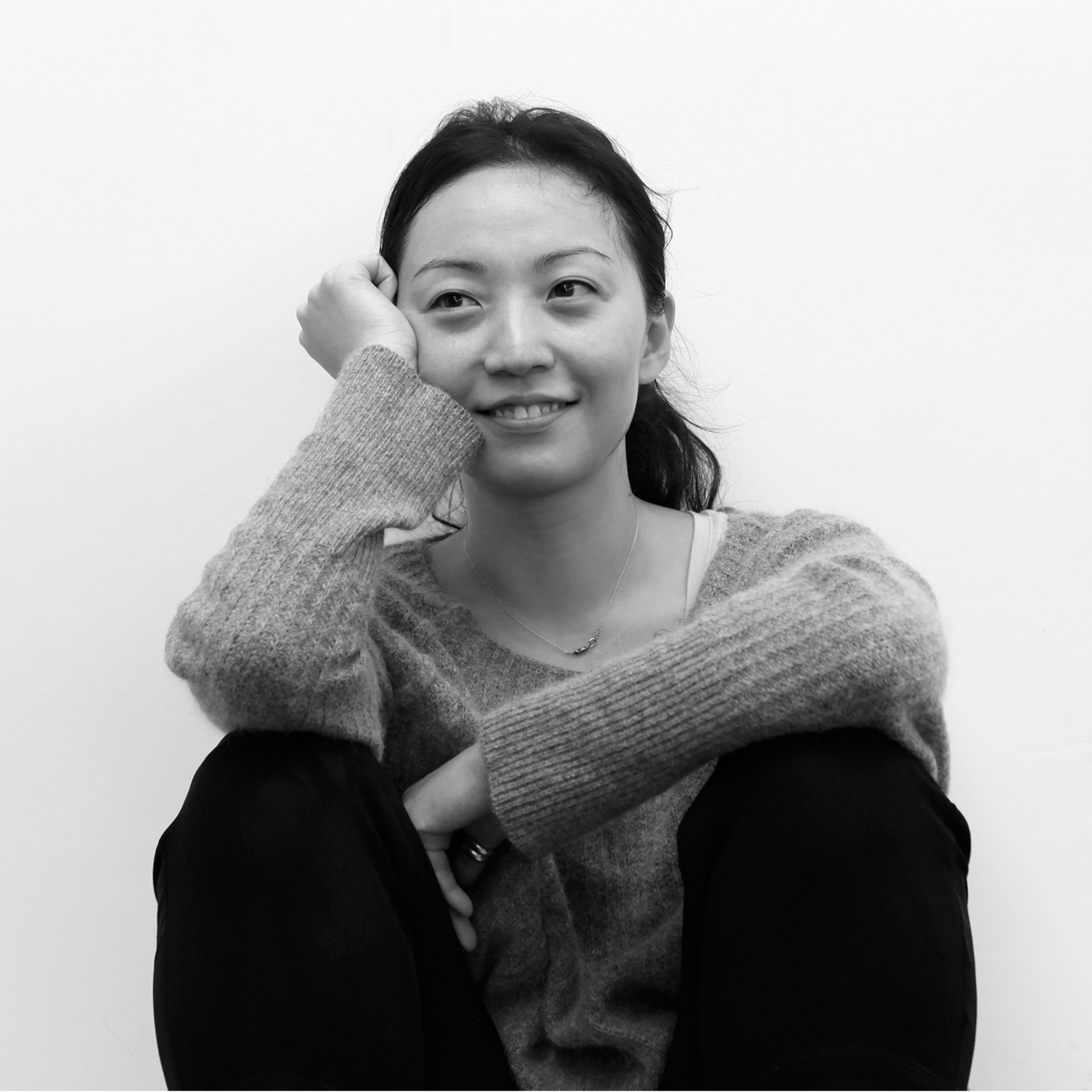
Yanghee Lee’s work begins with critical questions around the forms and lineages of dance. Though initially trained under the umbrella of “Korean traditional dance,” she later recognized that what she had learned was not merely the transmission of tradition, but a hybrid form shaped by modern stage aesthetics. This realization led her to examine how particular dance forms are constructed and formalized overtime. It drew her attention to shinmuyong1—a modern dance tradition foundational to Korean contemporary dance.
Shinmuyong, pioneered by Choi Seung-hee, is characterized by its fusion of diverse cultural elements and its emphasis on choreographic documentation. Lee was immersed in this structure from a young age and came to understand how the idea of tradition is often systematized through such frameworks. She pays close attention to how the label of “tradition” becomes fixed in relation to national identity, and seeks to reframe dance within a deeper, more layered historical context.
She also critically examines conventional stage formats. Challenging the hierarchical divide between dancer and viewer found in traditional theater, Lee explores more reciprocal forms of performance that reclaim dance as a shared, everyday practice. These efforts stem from her awareness of how dance is often regarded in Korean society—as inaccessible or difficult to relate to. To challenge this, she has consistently developed experimental platforms and workshops, drawing on her lived experience of Korea’s underground club culture and her collaborative work within New York’s dance community.
As she observed the Dano Gut Ritual at the Gangneung Danoje Festival becoming increasingly formalized, Lee noticed how the shaman’s expressive freedom was being limited. This led her to question how living traditions can lose their vitality when they are shaped into fixed structures. That reflection became the starting point for her recent work, LEEYANGHEE SANJO.
Unlike her previous open-form performances, Lee focused on refining techniques that have been built up in her body over many years and shaping them into a choreographed structure. Because dance has no written score, technical knowledge is passed on only through the dancer’s body. Lee conceived this piece as a way to preserve and record movements that exist only as long as she herself can embody them.
In LEEYANGHEE SANJO, the artist brings the musical structure of traditional sanjo2—which flows from slow rhythms to faster ones—into the realm of dance. Each segment of sanjo has its own character, yet together they build toward a layered, intensifying rhythm. Lee applies this logic to movement, arranging gestures in a way that gradually increases density and energy. In doing so, she creates a performance that is not only a stage work but also a record of her embodied technique—a form of transmission through the body.
She also includes a layered comparison within the piece. In one section, she presents a video of herself performing a standing dance (ipchum3) at Yewon School. The footage is still used today in dance education, but Lee believes that the subtle technical nuances—its dynamics, tension, and flow—are something only she can fully realize. She re-performs the dance in her present body, then screens the archival video to highlight the contrast between the two versions.
Lee acknowledges that dance is a living form— one that naturally evolves over time. As training environments and social conditions shift, some techniques fade or disappear. She accepts this as part of dance’s nature, yet feels a responsibility to shape and share the knowledge she has accumulated. LEEYANGHEE SANJO is the beginning of that process. She plans to continue this work through future pieces such as ipchum 1, 2, 3 and further developments of the sanjo form. At its heart, her work reflects a continued exploration of what defines dance and how tradition might evolve through time.
Lee also reconsiders what it means to share time with an audience. She believes that a performance should allow both the performer and the audience to experience time in their own way, with moments where those timelines occasionally intersect. Even when the viewer loses focus, drifts away, and then returns, she embraces this as part of the experience—not a physical journey, but a psychological departure and return.
She carefully constructs her performances with these moments in mind, designing gestures and rhythms that can open up shared time. For Lee, the audience’s journey is never linear, but one shaped by layered memory. Rather than trying to control how the performance is received, she allows it to unfold naturally. For her, the moment when a viewer re-engages is the very heart of performance. The more often those moments occur, the deeper the impression a work can leave.