- 1,025: With or Without Person, 2003-2008, 2025, acrylic on wood, dimension variable, 367 pieces from a total of 1,025.
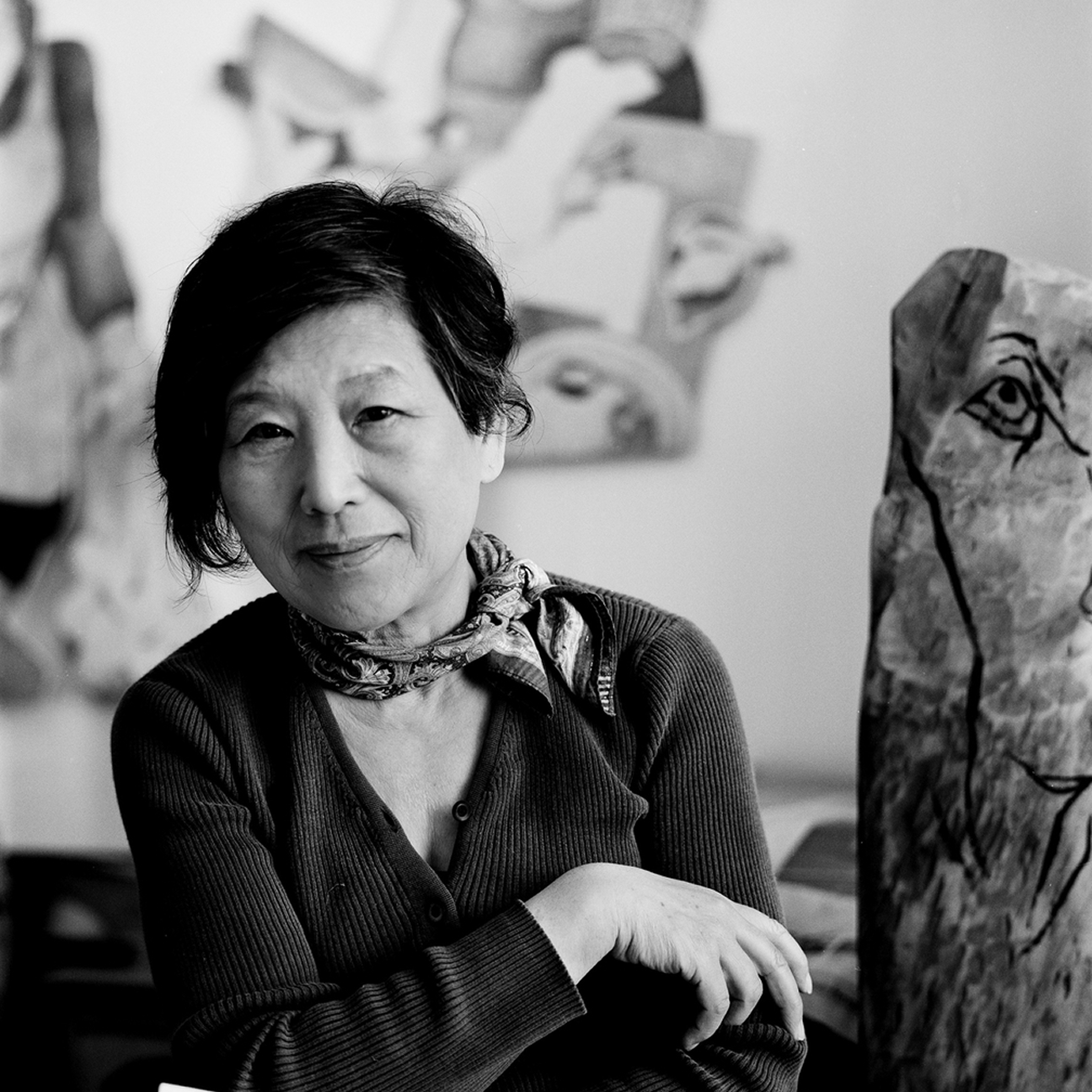
Born in 1939 in Manchuria under Japanese colonial rule, YUN Suknam made her debut as an artist in her forties. Beginning with her first solo exhibition in 1982, she became a central figure in Korea’s early feminist art movement. Through participation in key group exhibitions, her work asserted women’s voices as a legitimate subject of art. By reinterpreting motherhood and reflecting on the lives of her mother’s generation, YUN created a new narrative of womanhood from within a history shaped by silence and repression. Her lifelong exploration of the psychological and social realities of women’s lives paved the way for feminist art in Korea.
YUN’s work can be understood within the context of Korean feminist art, particularly through the lens of eco-feminism. Her largescale sculptural installation, 1,025: With or Without Person, presented at GIAF25, began with the story of Lee Ae-shin, an elderly woman who has cared for over a thousand abandoned dogs. After reading about her in a newspaper, YUN visited Lee’s shelter, “House of Ae-shin.” While YUN was struck by the heartbreaking reality of abandoned animals, she also felt deep respect for Lee and her dedication. This experience led YUN to recognize abandoned animals as socially marginalized beings, perhaps even as another representation of women. Completed after years of work, this seminal piece embodies compassion and solidarity, expressed through maternal love, care, and a profound love for humanity.
Ecofeminism, which first emerged in the West in the 1970s, is both a philosophical and practical movement. It began with the recognition that the domination of nature and the oppression of women stem from the same patriarchal, humancentered worldview. Since the 1990s, it has grown into one of the major strands within global feminism, characterized not by theoretical abstraction but by lived practice. YUN’s work challenges patriarchal and anthropocentric systems by standing in solidarity with women and other marginalized beings. Her art imagines a world in which all forms of life are treated with equal dignity—and challenges us to reflect on our relationships with life not as acts of control or pity, but as reciprocal and ethical engagements.
To create dog sculptures, YUN worked with the natural texture and grain of wood, cutting and shaping each figure by hand. After sketching each dog’s form, she sanded and primed the surfaces, painted them with layers of acrylic and ink, and carefully brought 1,025 figures to life through a twelve-step process that merges traditional painting methods with those of sculpture and installation. This long, meditative labor became an act of mourning for the lives that had been cast aside, and a quiet wish for coexistence between humans and nature.
Over time, these sculptures have been installed both inside and outside museums, rearranged and recontextualized according to the site. In doing so, the artist broadened our perception of life and reaffirmed the role of art within society.