
- Sweet & Sour, 2021-2022, three-channel video installation, color, sound, 21min. 57sec.
The Armenian Genocide (1890–1916) was the systematic extermination of the Christian Armenian population of the Ottoman Empire. Often referred to as the first genocide of the 20th century, it is estimated between 800,000 and 1.2 million Armenians were killed between the spring of 1915 and the autumn of 1916.
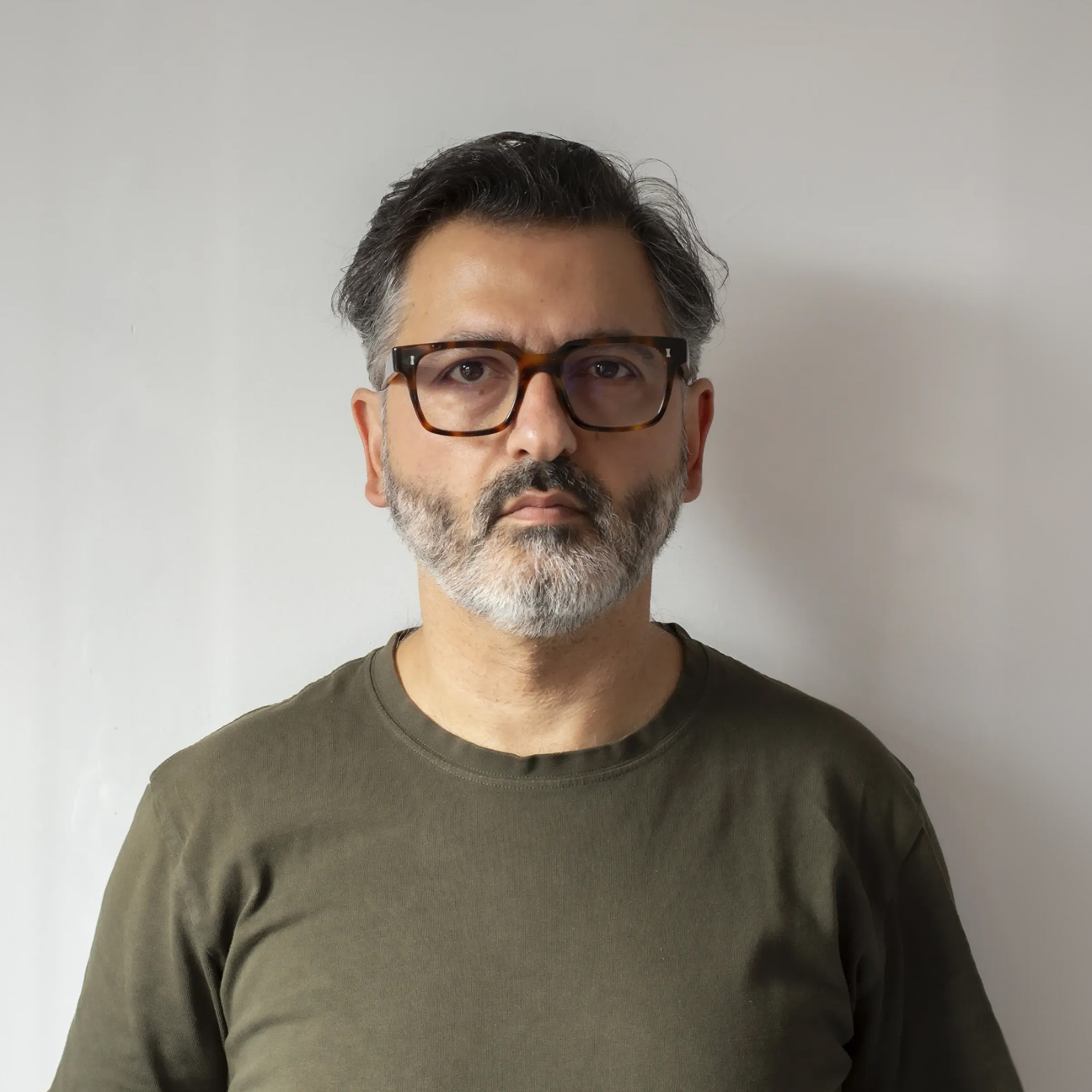
Born in Syria to a third-generation Armenian family, photographer Hrair Sarkissian inherited the trauma of this catastrophe through family memory. Although he never met his grandfather, he knew that he had come from the village of Khantsorig (“Little Apple”) in the Sasoun region, now within the borders of modern-day Turkey. A photograph of Sasoun, taken in 1923, hung in his family home and served as a symbolic device for remembering and passing down their history. In Armenian cultural imagination, Sasoun is remembered as the birthplace of myths, legends, and revolutionary songs, a significance that endures to this day.
At GIAF25, Sarkissian presents a video installation that closely links the memory of the genocide with the personal history of his family. His work, Sweet & Sour, is a deeply intimate search for origins within the framework of inherited memory. Commissioned by the Bonnefanten Museum in the Netherlands, the work is structured in three parts. In the first scene, the artist travels to Khantsorig and films its strangely familiar landscapes. In the second, he returns to Damascus to show this footage to his father, who has never set eyes on his ancestral land. Capturing the subtle emotions that cross his father’s face, the work conveys fragments of memory that cannot be put into words. In the final scene, the artist is seen gazing silently at the ancestral landscape.
Through this process, Sarkissian visualizes emotions and memory across generations. He reveals collective wounds embedded in absence and silence, invoking a forgotten history and identity through imagery. The work poignantly expresses the intersection of individual memory and collective history, family narrative and national identity.
Sarkissian’s practice seeks out traces of existence long submerged in silence. He captures the scars left behind by war and displacement, contemplating what has been lost and summoning what no longer exists. His work thus bears witness to forgotten lives and vanished presences.